Smart AI
Play against adaptive AI that adjusts to your level, or choose a training bot from Easy to Grandmaster. Build confidence at your own pace.
Play chess online for free on draughts.io with over a million members from around the world. Have fun playing with friends or challenging the computer!
Play Now


Free browser play. No download or registration required.
Click "Show reviews" to open feedback from players.
A familiar board, a choice of opponents, and room to improve.
Play against adaptive AI that adjusts to your level, or choose a training bot from Easy to Grandmaster. Build confidence at your own pace.
Find an opponent through public matchmaking, or create a private game and share the invitation link with a friend.
Play in a modern browser on your phone, tablet, or computer. The board and controls adapt to the space available.
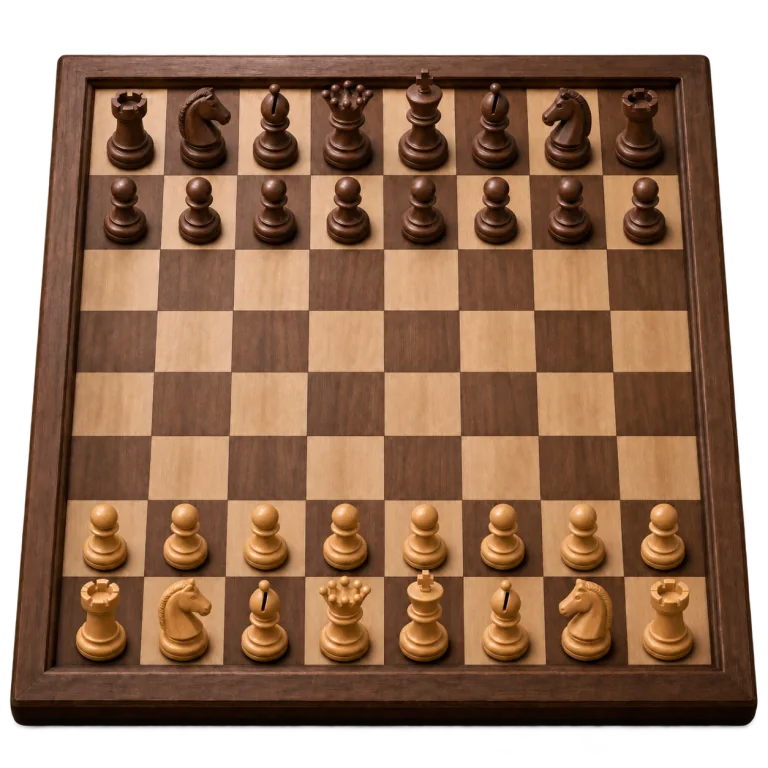
Choose a board theme and switch between wooden and classic chess pieces. Find a look that makes every position easy to read.
Open the game and choose how you want to play. There is nothing to install, and you can begin as a guest without creating an account.
Review saved games, step through the moves, and use game analysis to spot missed chances. Follow your chess rating and results as you play.
A quick match, a friendly challenge, or a little focused practice.
Join public matchmaking and put your ideas to the test against another player. Choose an available time control and make each move count.
Find a gameCreate a private chess game and send your friend the link. You can play from different devices and ask for a rematch when the game ends.
Play with a friendThe adaptive computer opponent responds to your playing strength. Try an opening, work through a tricky position, and enjoy a challenge that grows with you.
Play against AIPick a difficulty from Easy, Medium, Hard, Master, or Grandmaster. Choose your color and practise with a clock or without a time limit.
Choose a training botSit together and take turns on the same phone, tablet, or computer. It is a simple way to teach a first game or play a casual match side by side.
Play on one deviceAll play links open the chess lobby, where you can choose your opponent and settings.
Each side begins with 16 pieces. Learning how they work together is where chess begins.
Moves one square in any direction, as long as the destination is safe. Protect your king: a check with no legal escape is checkmate.
Moves any number of squares along a rank, file, or diagonal. Her range makes her powerful, but she still needs support from the other pieces.
Moves any number of squares horizontally or vertically. Rooks become especially effective on open files and in the endgame.
Moves any number of squares diagonally and always stays on the same square color. A pair of bishops can cover both colors of the board.
Moves in an L shape: two squares in one direction and one to the side. It is the only piece that can jump over other pieces.
Moves one square forward, or two from its starting square if the way is clear, and captures one square diagonally forward. Reach the far rank to promote.
Understand the essentials, then bring your own ideas to the board.
Chess is a strategy game for two players on an 8×8 board of 64 alternating light and dark squares. Each player starts with a king, a queen, two rooks, two bishops, two knights, and eight pawns. White moves first, and the players take turns making one move at a time.
The goal is checkmate: attack the opposing king so that it has no legal way to escape. You never capture the king itself. Winning material can help, but a well-coordinated attack can matter more than the number of pieces left on the board.
Every game brings together calculation and judgment. You decide which threats deserve an answer, where your pieces belong, and when to exchange, defend, or take the initiative.
Start with a light square on your right. White's pieces go on the first two ranks and Black's on the last two. The board is named with files a–h and ranks 1–8, so every square has a coordinate such as e4 or f6.
Arrange the back rank: rook, knight, bishop, queen, king, bishop, knight, rook. The queen starts on her own color: White's queen on d1 and Black's queen on d8. Place all eight pawns in the row immediately in front.
In an online game the board is set up for you. When you play Black, the board is usually turned so that your pieces are closest to you; the square names stay the same.
Moving and capturing: move one piece on your turn, except when castling. Most pieces capture by moving onto an enemy piece's square; pawns capture differently from the way they move. You cannot move onto a square occupied by your own piece, and only a knight can jump over pieces.
Check: when your king is attacked, you must deal with the threat. Move the king to safety, capture the attacking piece, or block the attack if possible. No move may leave your own king in check.
Checkmate: if your king is in check and no legal move removes it, the game is over. The player delivering checkmate wins. A game can also end through resignation or the clock.
Stalemate: if the player whose turn it is has no legal move but is not in check, the game is a draw. This is an important distinction when you have a winning position: leave the opponent a move unless you are delivering checkmate.
Other draws: games can also be drawn by agreement, repetition, the move-count rules, or a position in which checkmate is impossible. In online play, the game handles the relevant checks and records the result.
Castling moves your king two squares toward a rook, then places that rook on the square the king crossed. Neither piece may have moved before, and all squares between them must be empty. You cannot castle out of check, through an attacked square, or into check.
En passant is a special pawn capture. When an opposing pawn advances two squares from its starting square and lands beside your pawn, you may capture it as though it had advanced only one square. You must do so on your very next move, or the opportunity is lost.
Promotion happens when a pawn reaches the farthest rank. Replace it with a queen, rook, bishop, or knight of the same color. You may choose any of these even if you still have the original pieces. A queen is the usual choice, though a knight or another piece can occasionally be better.
In the opening, develop your pieces, influence the center, and look after your king. Moves such as 1. e4 and 1. d4 open useful lines, but understanding your next few moves matters more than memorizing a long variation.
In the middlegame, turn development into a plan. Find weak squares, improve your least active piece, and calculate forcing moves. Attacks work best when several pieces can reach the same part of the board.
In the endgame, the king becomes an active piece and pawns become potential queens. Learn a few essential checkmates and king-and-pawn positions. A single well-timed king move can decide a game with very little material left.
Check your opponent's idea. Before planning your own move, ask what changed. Is a piece under attack? Has a diagonal opened toward your king? Many avoidable mistakes begin with overlooking a simple threat.
Develop with purpose. Bring knights and bishops into play, contest central squares, and castle when it makes your king safer. Moving the same piece repeatedly can leave the rest of your army waiting on its starting squares.
Look for forcing moves. Checks, captures, and direct threats help narrow the possibilities. Learn to recognize forks, pins, skewers, and discovered attacks, then calculate the opponent's best reply before committing.
Use exchanges carefully. Pawns are often valued at 1, knights and bishops at about 3, rooks at 5, and queens at 9. These are rough guides. King safety, activity, and the resulting position can make a trade good or bad.
Give every piece a job. Keep pieces defended, connect your rooks, and avoid pawn moves that leave lasting weaknesses. When you have no immediate tactic, improving your least useful piece is a practical starting point.
Chess is generally traced to chaturanga, a game played in India around the sixth century. It spread through Persia and the Islamic world before reaching Europe, changing as players adapted its pieces and rules.
The powerful modern queen and long-range bishop emerged in Europe in the late fifteenth century. These changes made the game faster and gave attacks much of the character they have today.
Organized tournaments and world championship matches helped establish chess as an international competitive game. Today, online play lets beginners and experienced players find opponents, practise, and study the same game from almost anywhere.
Choose games that give you enough time to think. A fast clock can be exciting, but a slower training game makes it easier to notice threats and explain your own choices.
After a game, find one moment you would handle differently. Review it yourself before checking the analysis, then play through the better continuation. Understanding one mistake is more useful than quickly scrolling past a whole list.
Alternate between practice and play: learn a basic mating pattern, try it against a training bot, then look for the same idea in a game with a person. Keep the task small enough to remember at the board.
Answers about chess rules, practice, and playing online.
Play a free game of chess against AI, a friend, or a new opponent.
Start Playing for Free