Choose Your Opponent
Choose the person you want to play. Create a private invitation and send it to a friend instead of looking for a random opponent.
Turn a spare moment into a game with a friend. Create a private chess invitation, share the link, and play together from your own devices. Enjoy a live match in your browser, wherever you both are — free, with no download or registration required.
Play Chess with Friends


Free chess with friends. Share an invitation and play in your browser.
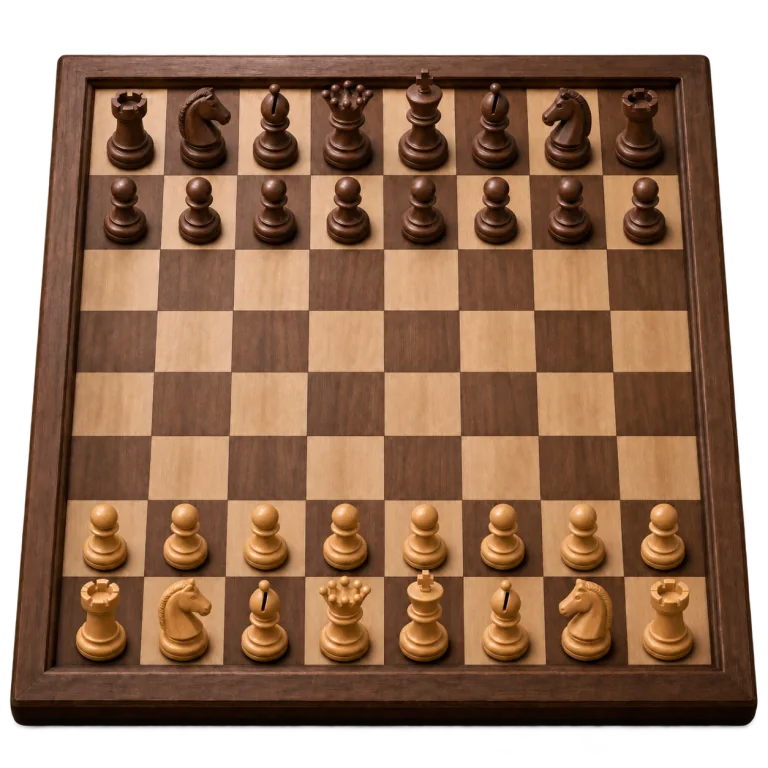
Your friend, one shared board, and a new story every game.
Choose the person you want to play. Create a private invitation and send it to a friend instead of looking for a random opponent.
Share the game link through your usual messaging app or email. Your friend can open it in a browser and join your chess game.
Open the game and start as a guest. There's no account to create or software to install before you can enjoy a game of chess.
Use your phone, tablet, laptop, or desktop computer. The board adapts to your screen, so you and your opponent don't need the same kind of device.
See your friend’s moves as they happen and take turns on the same board. Both players stay connected for a live game from the first move to the final result.
Enjoy free chess together without buying a board or installing software. Start as guests and make room for another game whenever you both have time.
Create an invitation, send it to your friend, and get ready for the first move.
Separate devices: use a private invitation to play from different phones, tablets, or computers. You do not need the same type of device.
One device: if you are sitting together, choose the same-device mode and take turns on a single board. No invitation is needed.
A friendly series: play several games and keep your own score. One point for a win and half a point for a draw makes a simple format for an evening of chess.
A group of friends: arrange pairs and create a separate private game for each match. Each chessboard has two players; you can organize the pairings and scores yourselves.
Six kinds of pieces, one clear goal: checkmate the opposing king.
Chess is played on an 8×8 board with 64 light and dark squares. Each player starts with 16 pieces: one king, one queen, two rooks, two bishops, two knights, and eight pawns.
Keep a light square in the bottom-right corner. The queen starts on a square of her own color, with the king beside her. White makes the first move, and the players then alternate turns.
Most pieces capture by moving onto a square occupied by an enemy piece. You may never leave your own king in check, and the king itself is never captured.
Check: Your king is under attack. You must escape by moving the king, capturing the attacking piece, or blocking the attack where possible.
Checkmate: The king is in check and there is no legal way out. The game is over. If a player has no legal move but is not in check, the result is stalemate — a draw.
Castling: The king moves two squares toward a rook, and that rook moves to the square the king crossed. Neither piece may have moved before, the squares between them must be empty, and the king cannot castle out of, through, or into check.
Promotion: A pawn that reaches the farthest rank becomes a queen, rook, bishop, or knight of the same color. A queen is the usual choice, but sometimes another piece is better.
En passant: If an enemy pawn advances two squares and lands beside your pawn, your pawn may capture it diagonally as though it had advanced only one square. You must do so on your very next move.
Make time together, share ideas, and keep a friendly rivalry going across any distance.
A chess game gives you something to share, even when you live far apart. Send an invitation, settle into a familiar routine, and catch up over a call or your usual messages while you play.
Regular matches reveal how your friend approaches a position. Do they attack early, trade pieces, or look for an endgame? Recognizing those habits helps you choose a plan and gives your next game a different challenge.
After the game, compare the moments you found difficult. Talk through a missed threat, an interesting pawn move, or a different way to defend. Working out an idea together can make the next match more rewarding for both of you.
Turn a single game into an occasional tradition. Try a short series with a friend or arrange pairs within your group. Keep the score yourselves and make the next meeting a chance for a rematch.
A little preparation helps you both enjoy the game and give it your attention.
Fight for the center. Central pawns and active pieces give you space and make it easier to move from one side of the board to the other.
Develop your knights and bishops. Bring pieces into play before moving the same piece repeatedly. Avoid sending your queen out early without a clear reason.
Keep your king safe. Castle when the position calls for it, and think carefully before moving the pawns that protect your king.
Check your opponent's threats. Before every move, ask what changed after their last turn. Look for checks, captures, and undefended pieces on both sides.
Pick a good moment. Start when you both have time to finish a live match. Keep the board open and avoid interruptions while your game is in progress.
Compare ideas afterward. Choose a position that surprised you and talk about what each of you was planning. A friendly game is a useful chance to learn how someone else thinks.
Play a short series. A few games give both players more chances to try ideas. Agree on the format in advance and keep a simple score if you enjoy the competition.
Keep the connection steady. Use a reliable internet connection and a screen you can read comfortably. Both players need to stay connected during an online match.
Practice on your own, meet another opponent, or share a board in person.
Create a private invitation and enjoy a familiar rivalry, wherever you both happen to be.
Play with a friendFind another player and put your plans to the test in a live two-player match.
Find a gamePractice with adaptive AI or choose a training bot that suits your current level.
Play against AIShare a phone, tablet, or computer and take turns on a single chessboard.
Play togetherA few things to know before your first move.
Yes. You can play chess with a friend for free in your browser. Open the chess lobby, create a private invitation, and share the link.
No. Both players can join as guests without registering or downloading software.
Open the chess lobby and choose the option to play with a friend online. Create a private game, then send your friend the invitation link or game code so they can join.
Yes. One player can use a phone while the other uses a tablet, laptop, or desktop computer. Each of you needs a modern browser and an internet connection.
Yes. Private online chess is played in real time, so both players need to be connected for the match. You take turns on one shared board.
Each chessboard is for two players, one on each side. For a group, organize pairs and create a separate private game for each match. You can keep your own pairings and scores.
Yes. After the game finishes, you can offer a rematch. When your friend accepts, you can play another game together.
Yes. If you are together, choose the same-device mode in the chess lobby and take turns on one board. A private invitation is only needed when you play from separate devices.
Send an invitation, make your first move, and see where the next friendly game takes you.
Play Chess with Friends for Free