Checkers, also known as draughts, is one of the world's oldest and most accessible strategy board games. The rules are easy to learn, but the game becomes surprisingly deep once you start thinking about forced captures, king movement, sacrifices, traps, and endgames.
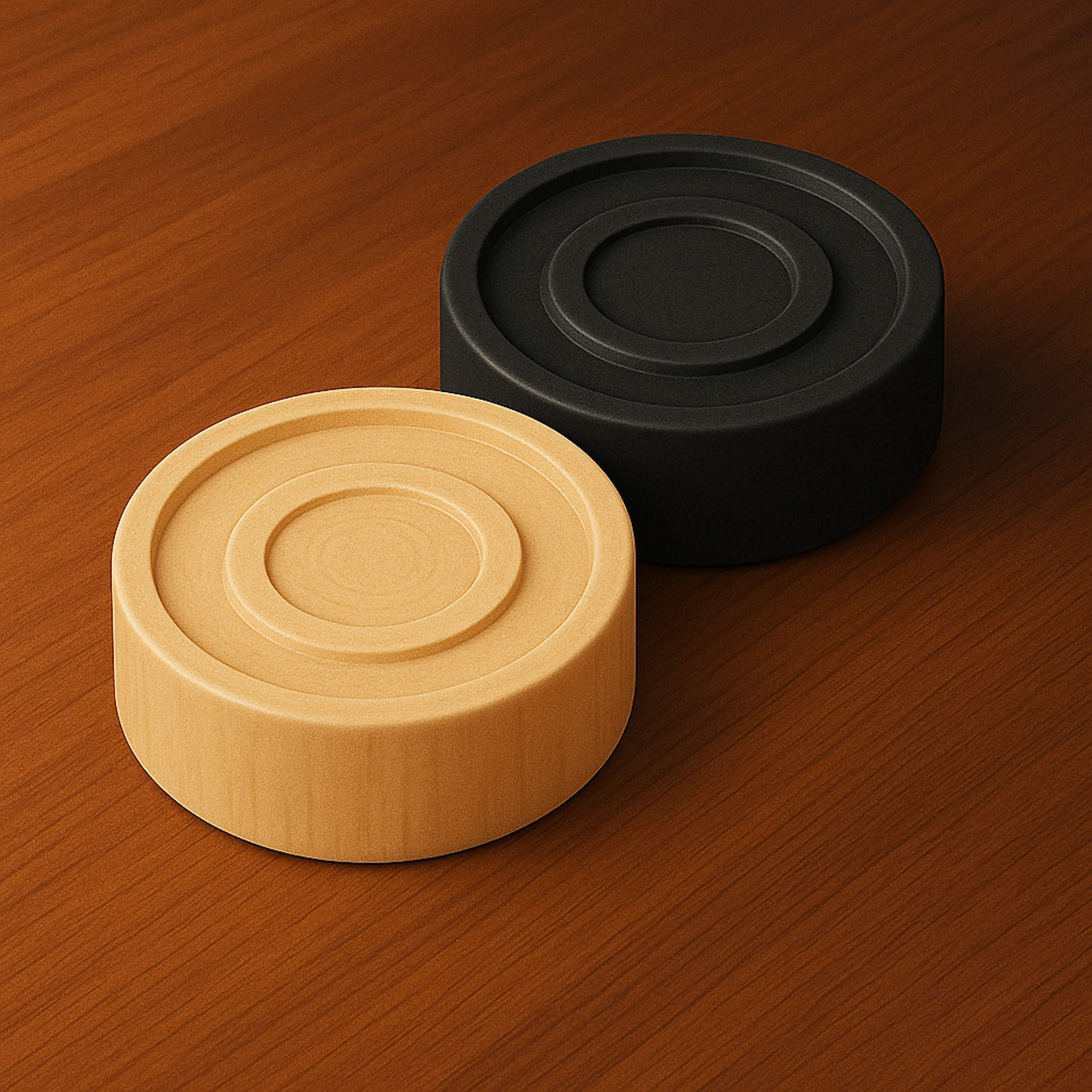
In the United States, "checkers" refers to the 8x8 game known as American checkers or straight checkers. In the United Kingdom and many other countries, the same family of games is more often called "draughts". But there is not just one version of the game. English draughts, Russian draughts, Brazilian draughts, and International draughts all share the same basic idea, while differing in important tactical rules.
This guide explains how to play checkers and compares the most important variants.
What Is Checkers?
Checkers is a two-player strategy game played on the dark squares of a checkered board. Each player controls a set of pieces, called men at the start of the game. The goal is to capture all of the opponent's pieces or block them so they have no legal moves left.
In most versions, the game is played only on dark squares. In International Checkers, the official competitive board is 10x10 with 100 squares, but only the 50 dark squares are active. Each player starts with 20 pieces.
In English Checkers, the standard board is 8x8, with 12 pieces per side.
Basic Checkers Rules
Although different variants have different details, the core rules are similar.
1. Board and Starting Position
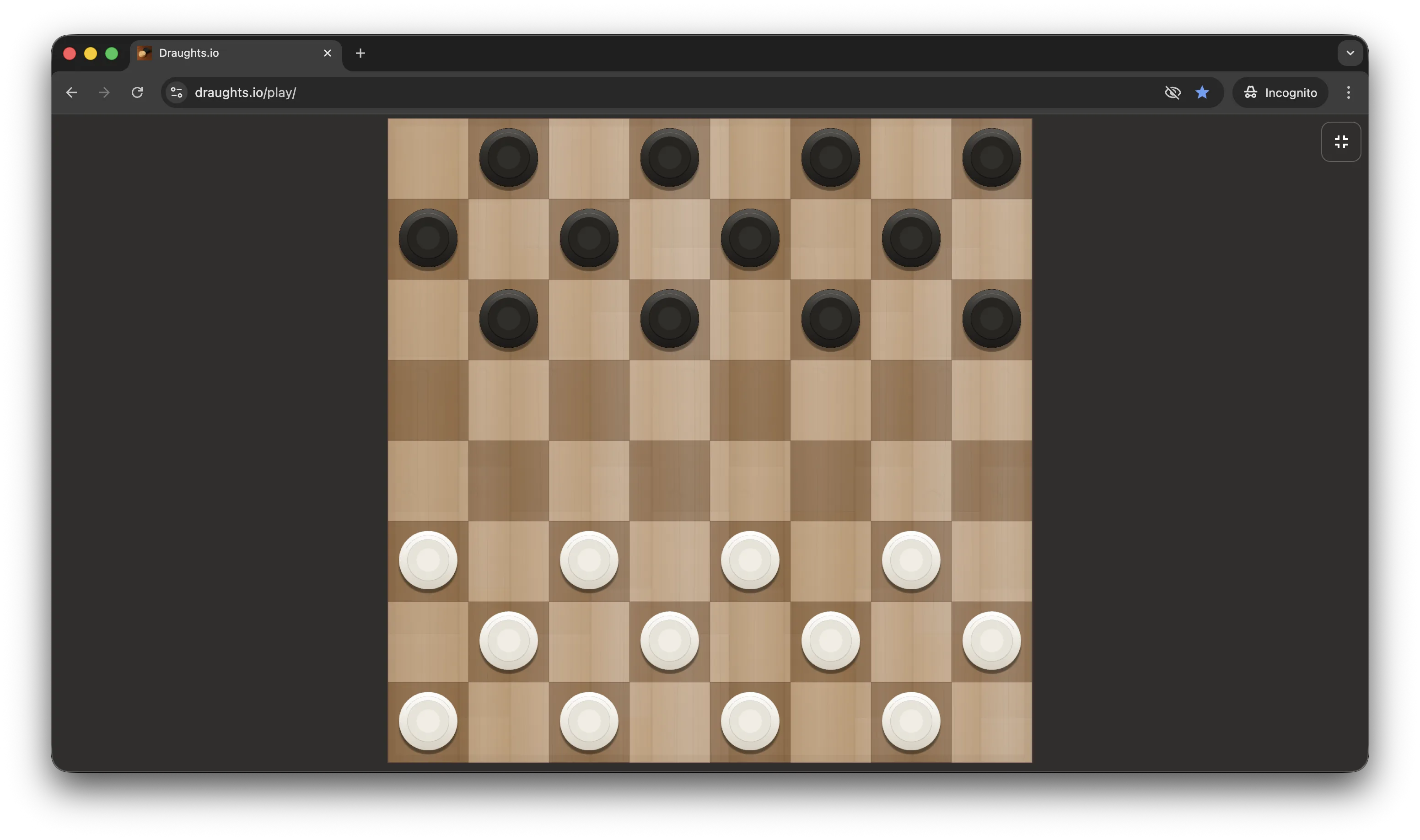
A standard 8x8 checkers board has 64 squares. Only the dark squares are used. Each player starts with 12 pieces placed on the three rows closest to them.
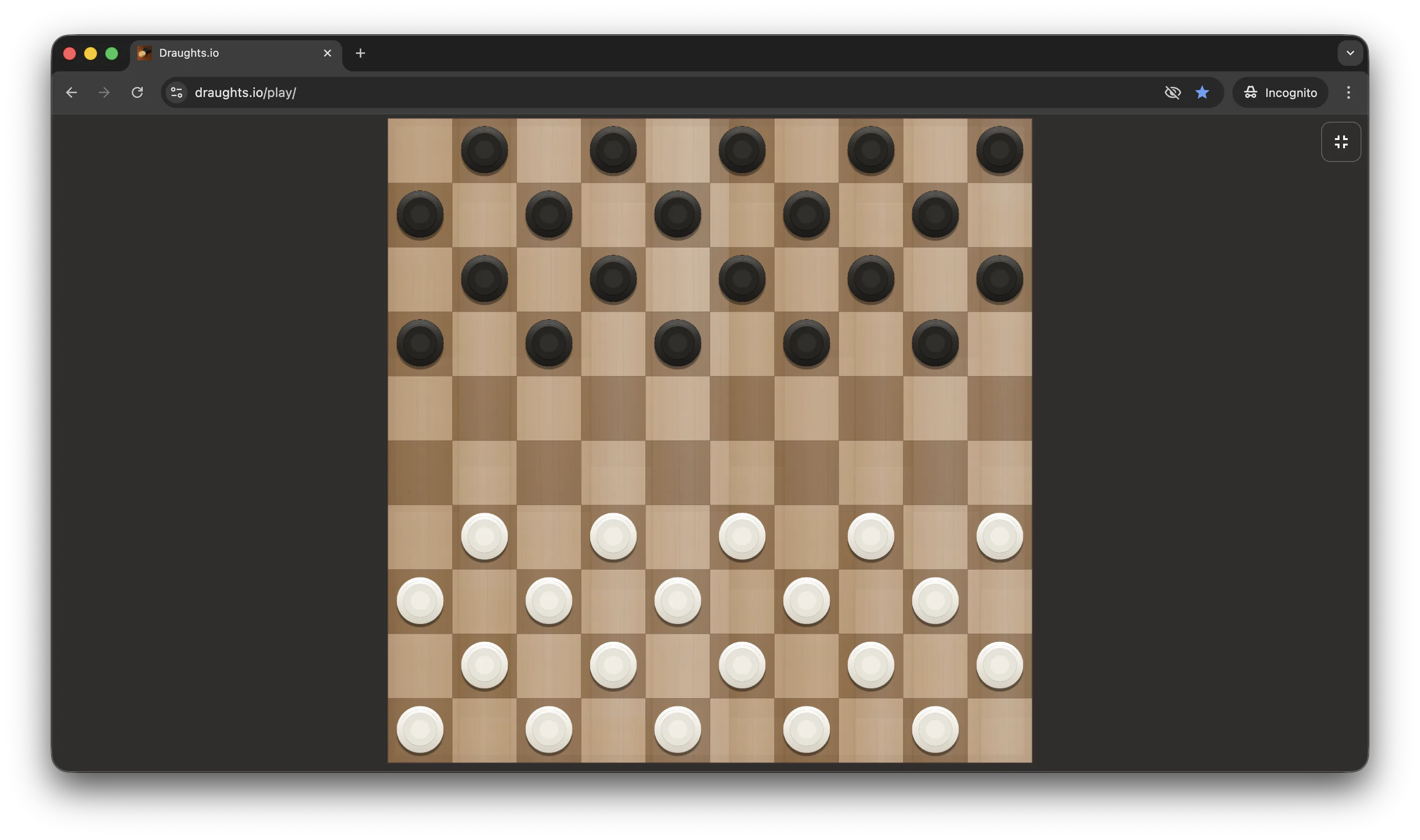
In International Checkers, the board is larger: 10x10. Each player starts with 20 pieces placed on the four rows closest to them.
2. Movement of Men
A regular piece is called a man.
In English Checkers, a man moves diagonally forward by one square to an empty adjacent square. In Russian, Brazilian, and International Checkers, men also move forward when not capturing.
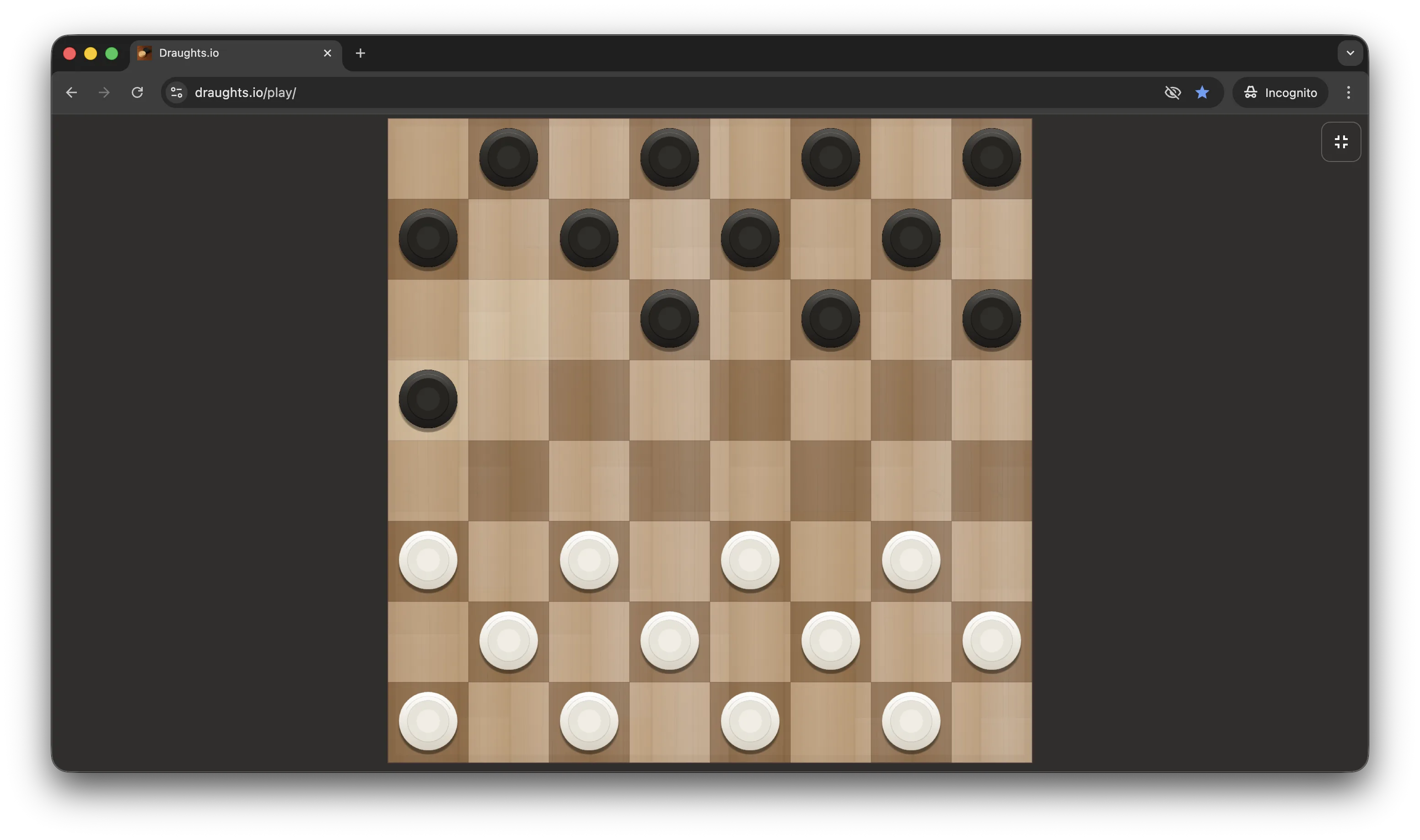
The big difference appears during captures: in Russian, Brazilian, and International Checkers, men can capture both forward and backward.
3. Capturing
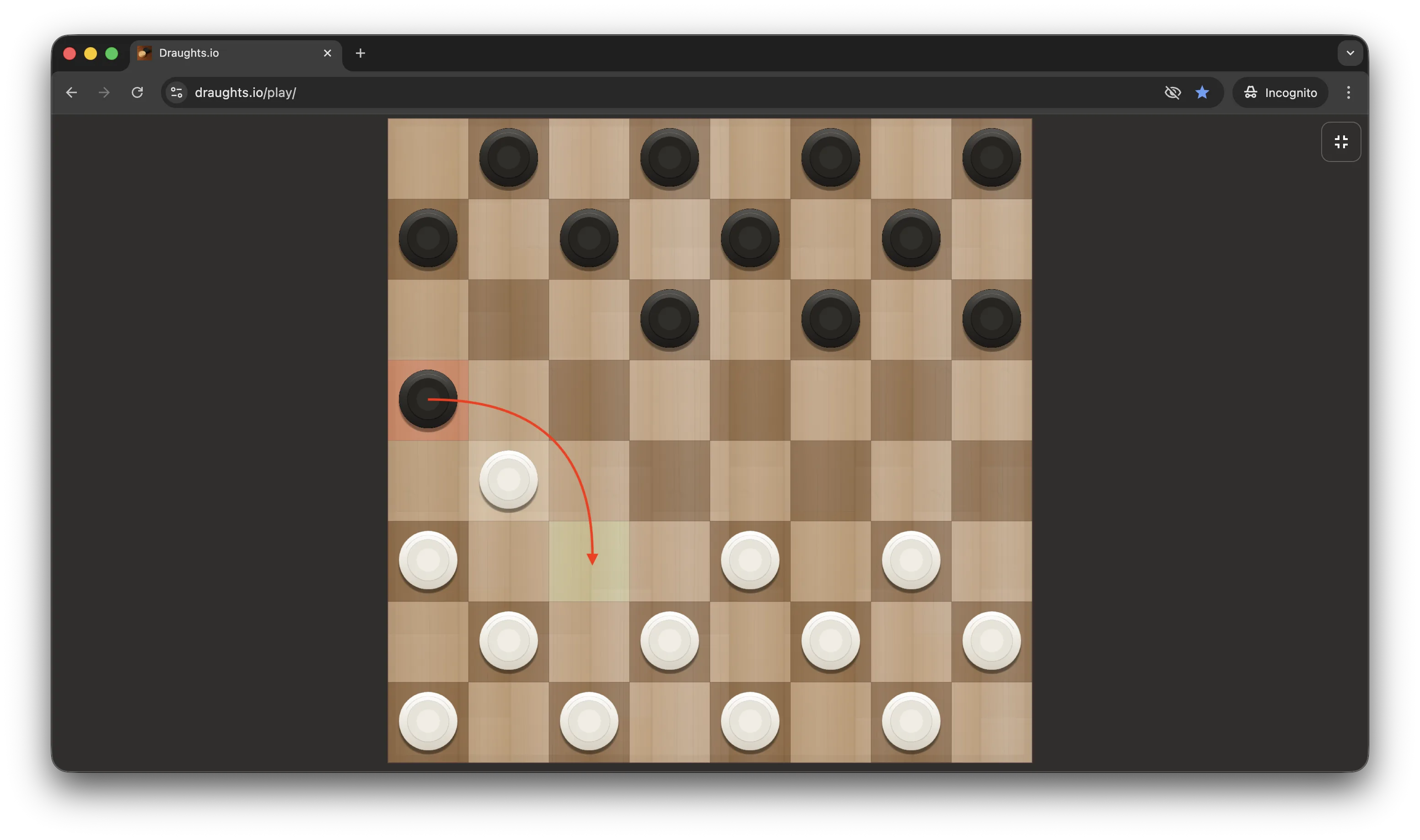
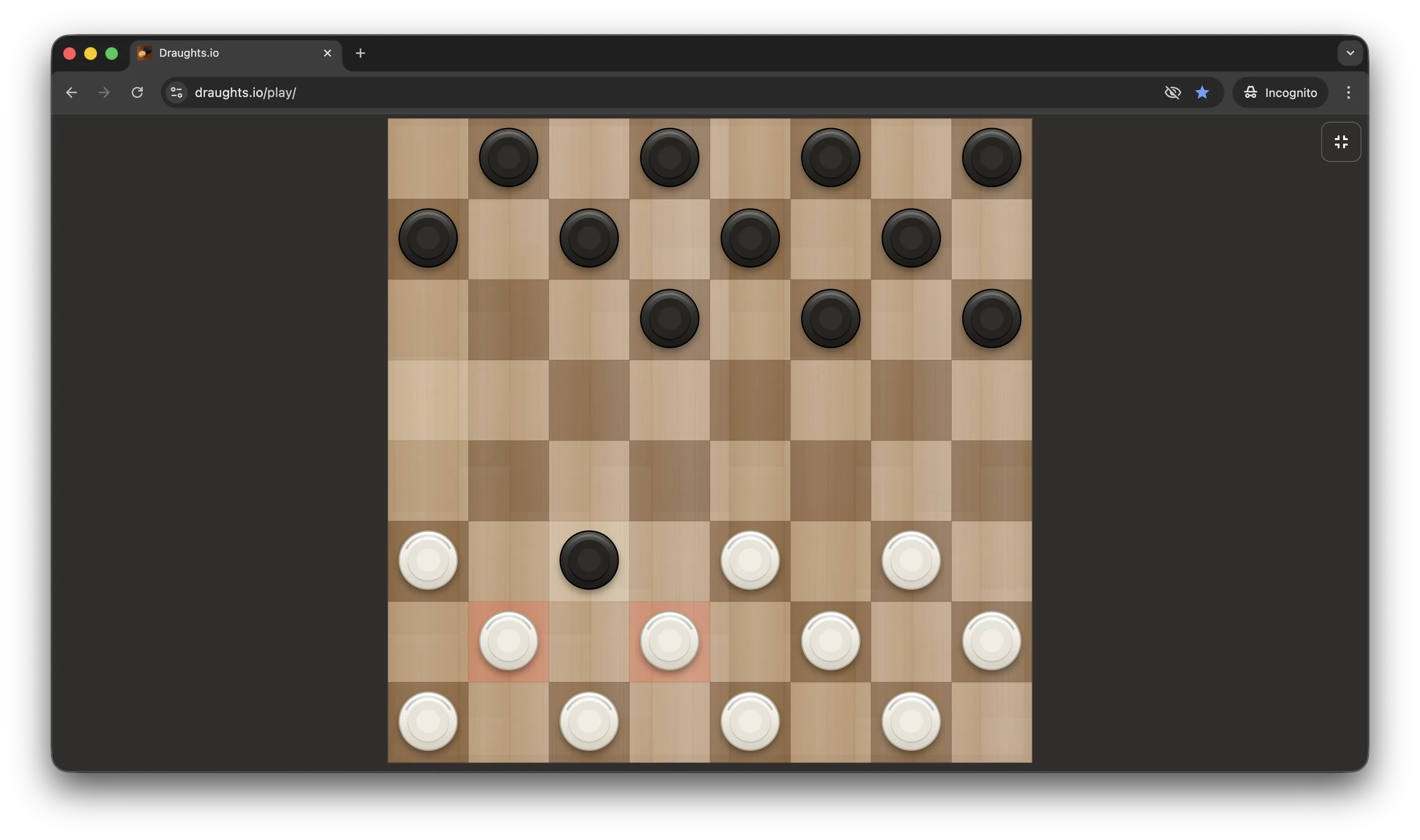
Capturing is done by jumping over an opponent's piece onto an empty square beyond it. The captured piece is removed from the board after the capture sequence is completed.
In most official draughts and checkers variants, capturing is mandatory. If you can capture, you must capture.
In English Checkers, a man captures forward only. In Russian, Brazilian, and International Checkers, captures can be made forward and backward.
4. Multiple Captures
If, after a capture, the same piece can capture again, it must continue. This is called a multiple capture or multi-jump.
This rule is very important because it creates tactical combinations. Sometimes you can sacrifice one or more pieces to force your opponent into a bad capture sequence.
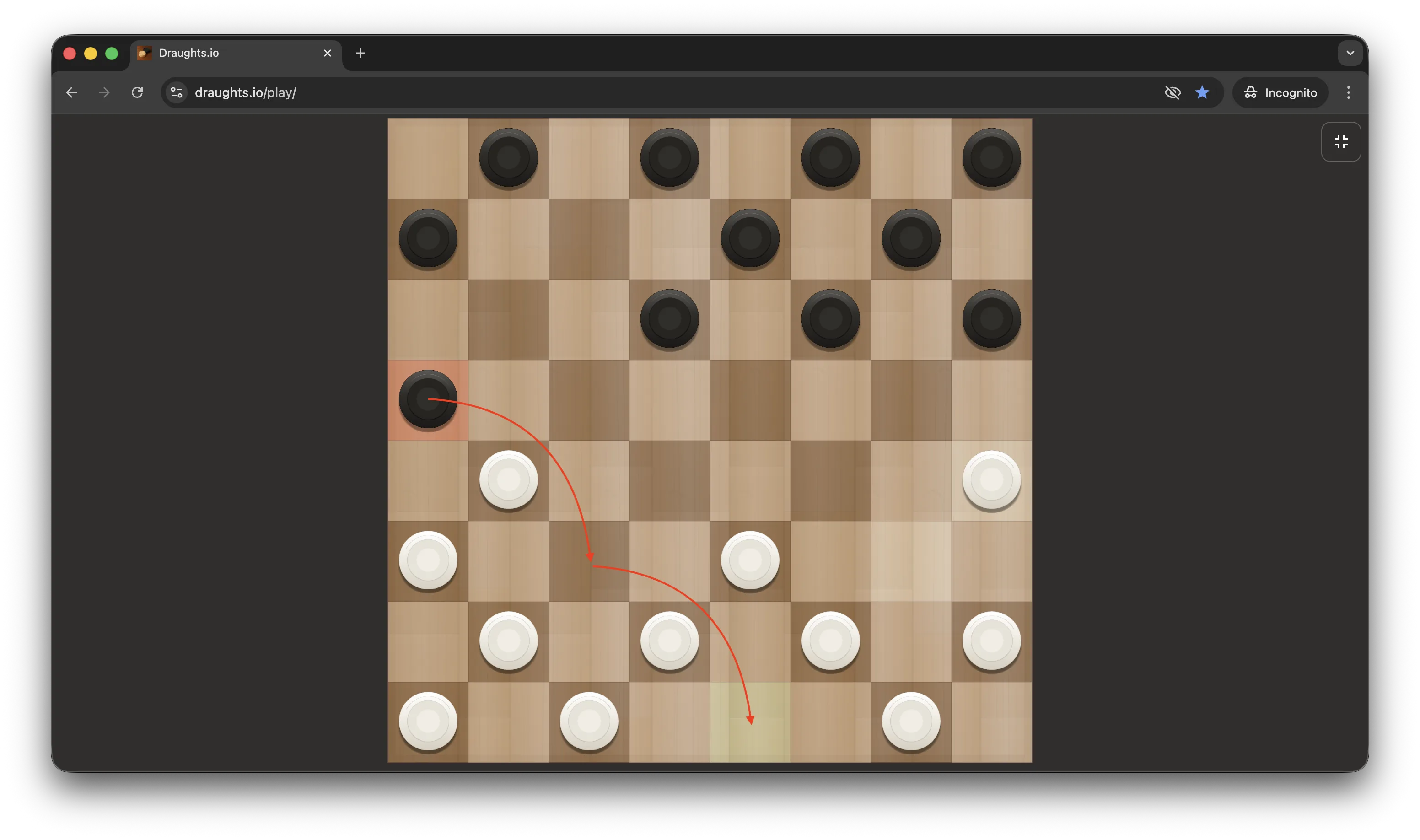
In English Checkers, if a jump creates another immediate jump, the capture must continue until all jumps are completed. In Russian, Brazilian, and International Checkers, multiple captures are also central to the game. Flying kings make these sequences much more complex.
5. Promotion to King
When a man reaches the opponent's back row, it becomes a king.
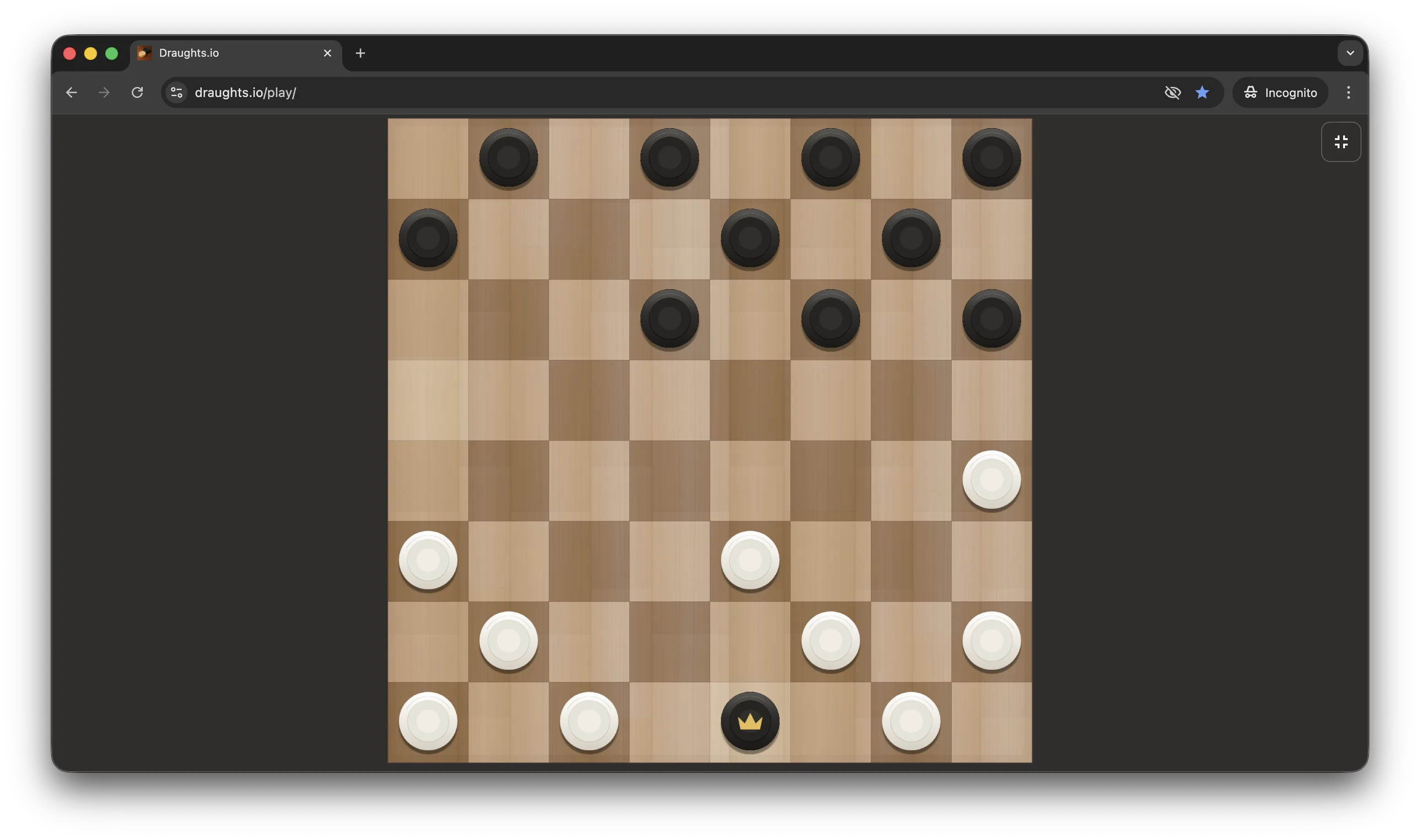
In English Checkers, when a man reaches the king row, it becomes a king and the turn ends. It cannot continue capturing as a king during the same move.
In Russian Checkers, promotion during a capture is more dynamic. If a man reaches the last row during a capture and can continue capturing, it continues the sequence as a king.
In Brazilian Checkers, a man is promoted only when it reaches and stops on the last row. If the capture sequence continues through the promotion row, the piece does not immediately become a flying king during that same sequence.
In International Checkers, promotion also depends on where the man finishes the capture sequence. If a man only passes through the promotion row during a multiple capture and ends the move on another row, it remains a man.
What Is a King?
A king is a promoted piece. Kings are stronger than regular men because they can move and capture backward as well as forward.
But not all kings are equal across checkers variants.
English Checkers King
In English Checkers, a king moves one square diagonally forward or backward. It captures by jumping over an adjacent opponent's piece, similar to a regular man, but in both directions.
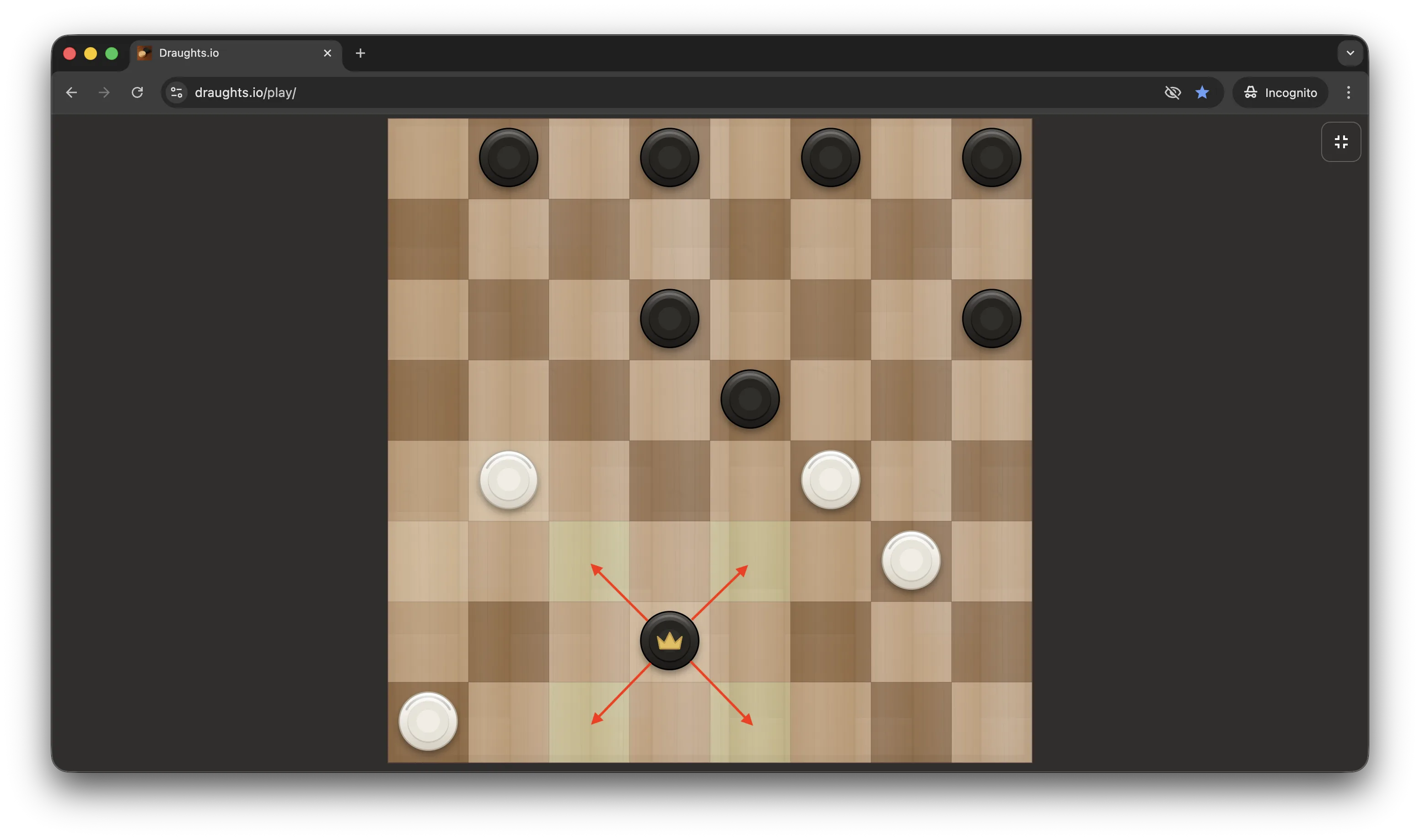
Russian, Brazilian, and International Flying Kings
In Russian, Brazilian, and International Checkers, kings are flying kings. A flying king can move across any number of empty squares on a diagonal.
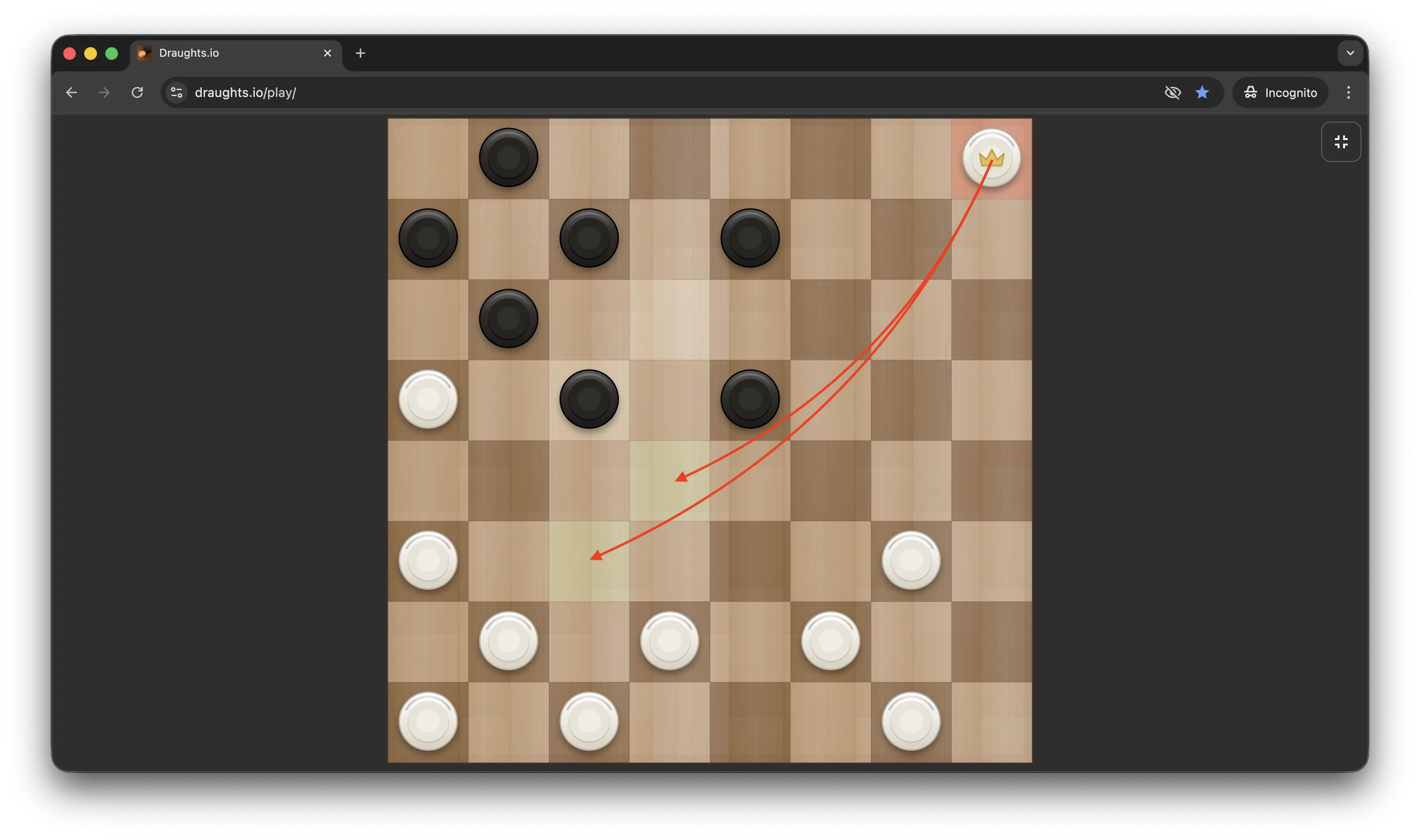
That makes the game much sharper. A king can attack from long distance, control large parts of the board, and create complex multi-capture sequences.
Main Checkers Variants Compared
1. English Checkers / American Checkers
English Checkers is the most familiar version in the United States and the United Kingdom. It is also often called American checkers or straight checkers.
Board: 8x8.
Pieces: 12 per player.
Movement: Men move forward diagonally by one square.
Capturing: Men capture forward only. Kings capture forward and backward.
Kings: Kings move one square at a time. They are not flying kings.
Capture choice: If several captures are available, the player may choose which capture to make. The player is not required to choose the capture that takes the most pieces.
Difficulty level: English Checkers is the easiest version for beginners. The rules are clean, the board is smaller, and kings are less powerful than in Russian, Brazilian, or International Checkers.
2. Russian Checkers
Russian Checkers, also called shashki, is popular in Russia, Ukraine, Belarus, and other countries of Eastern Europe and the former USSR.
Board: 8x8.
Pieces: 12 per player.
Movement: Men move forward diagonally when making a normal move.
Capturing: Men can capture both forward and backward. This is one of the biggest differences from English Checkers.
Kings: Kings are flying kings. They can move any distance along an open diagonal.
Promotion: If a man reaches the last row during a capture and can continue capturing, it continues as a king. This makes promotion combinations very powerful.
Capture choice: In Russian Checkers, unlike Brazilian and International Checkers, the player is not forced to choose the line that captures the maximum number of pieces. If several captures are available, the player can choose.
Difficulty level: Russian Checkers is more tactical than English Checkers. Backward captures and flying kings create more combinations and more traps.
3. Brazilian Checkers
Brazilian Checkers is played on an 8x8 board, but its logic is closer to International Checkers than to English Checkers.
Board: 8x8.
Pieces: 12 per player.
Movement: Men move forward diagonally.
Capturing: Men capture forward and backward.
Kings: Kings are flying kings.
Maximum capture rule: If multiple captures are available, the player must choose the sequence that captures the greatest number of pieces.
Promotion difference: In Brazilian Checkers, a man is promoted only when it reaches and stops on the last row. If the capture sequence continues through the promotion row, the piece does not immediately become a flying king during that same sequence.
Difficulty level: Brazilian Checkers is very tactical. The maximum capture rule means players must calculate forcing lines carefully. You cannot simply choose the safest capture if another line captures more pieces.
4. International Checkers
International Checkers is the main professional 10x10 version.
Board: 10x10 with 100 squares. Only the 50 dark squares are used.
Pieces: 20 per player.
Movement: Men move forward diagonally.
Capturing: Men capture forward and backward.
Kings: Kings are flying kings. They can move across multiple empty squares on a diagonal.
Maximum capture rule: If several capture sequences are available, the player must choose the line that captures the greatest number of pieces.
Promotion difference: If a man only passes through the promotion row during a multiple capture and ends the move on another row, it remains a man.
Difficulty level: International Checkers is often considered the most complex of the four variants described here. The larger board, 20 pieces per side, backward captures, flying kings, and maximum capture rule create a very rich strategic game.
Quick Comparison Table
| Variant | Board | Pieces per player | Men capture backward? | Kings | Must take maximum number? | Promotion during capture |
|---|---|---|---|---|---|---|
| English / American Checkers | 8x8 | 12 | No | One-square kings | No | Turn ends when a man reaches the king row |
| Russian Checkers | 8x8 | 12 | Yes | Flying kings | No | Can continue as a king |
| Brazilian Checkers | 8x8 | 12 | Yes | Flying kings | Yes | Promotes only if it stops on the last row |
| International Checkers | 10x10 | 20 | Yes | Flying kings | Yes | Passing through the promotion row does not promote unless the move ends there |
How to Win at Checkers
Winning checkers is not only about capturing pieces. Strong players think about position, tempo, forced sequences, promotion paths, and king control.
1. Control the Center
Pieces in the center have more mobility than pieces on the edge. A central piece can often move or capture in more directions.
In English Checkers, center control helps you avoid being trapped. In Russian, Brazilian, and International Checkers, center control is even more important because backward captures create more tactical threats.
2. Do Not Rush Every Capture
Captures are mandatory in most official Checkers variants, but that does not mean every capture is good for you. Sometimes your opponent offers a piece as a trap.
Before capturing, ask:
- Can my opponent recapture?
- Will I lose more pieces after this jump?
- Am I being forced into a bad multi-capture?
- Will this move open a path for my opponent to become a king?
3. Use Sacrifices
A sacrifice means giving up a piece to gain a better position or force a stronger capture later.
In Checkers, sacrifices are often used to create mandatory capture sequences. This is especially powerful in Brazilian and International Checkers because the maximum capture rule can force your opponent into a specific line.
4. Protect Your Back Row
Your back row prevents the opponent from promoting. If you move too many back-row pieces too early, you may give your opponent an easy path to king.
However, keeping the back row forever is also bad because you may lose mobility. Good play requires balance.
5. Think Before Creating Kings
Kings are powerful, but promotion is not always immediate victory. In English Checkers, kings move only one square, so they are strong but not overwhelming.
In Russian, Brazilian, and International Checkers, flying kings are much stronger. A single flying king can control long diagonals and force dangerous captures.
6. Learn Forced Lines
Checkers is a game of calculation. Because captures are mandatory, many positions have forced lines.
A good habit is to calculate:
- My move.
- Opponent's forced capture.
- My next capture.
- Final material balance.
This is especially important in Brazilian and International Checkers, where the maximum capture rule can completely decide the position.
Which Version Should Beginners Learn First?
If you are completely new, start with English Checkers. It has the simplest rules: 8x8 board, 12 pieces per player, forward captures for men, and one-square kings.
If you want a more tactical version, try Russian Checkers. It keeps the 8x8 board but adds backward captures and flying kings.
If you want a stricter tactical game, try Brazilian Checkers. It is still 8x8, but the maximum capture rule makes calculation more demanding.
If you want the most complete and professional version, learn International Checkers. The 10x10 board and 20 pieces per side create deeper strategy and longer games.
Conclusion
Checkers is simple to start but difficult to master. The basic idea is always the same: move diagonally, capture by jumping, promote your pieces, and block or eliminate your opponent. But the variant you choose changes the entire character of the game.
English Checkers is clean and beginner-friendly. Russian Checkers is fast, tactical, and dynamic. Brazilian Checkers adds stricter capture logic. International Checkers is often considered the most complex version here, played on a larger 10x10 board with powerful flying kings and maximum capture rules.
FAQ
What is checkers?
Checkers is a strategy board game played on the dark squares of the board. The goal is to capture all of the opponent's pieces or block them so they have no legal move.
Is checkers the same as draughts?
They refer to the same family of games. In the United States, people more often say checkers, while in the United Kingdom and many other countries the word draughts is more common.
How many pieces does each player start with in checkers?
In English, Russian, and Brazilian Checkers, each player starts with 12 pieces on an 8x8 board. In International Checkers, each player starts with 20 pieces on a 10x10 board.
Is capturing mandatory in checkers?
Yes. In most official checkers and draughts variants, if a capture is available, the player must make a capture.
Can a regular checker capture backward?
That depends on the variant. In English Checkers, men capture only forward. In Russian, Brazilian, and International Checkers, men can capture both forward and backward.
What happens if more than one capture is available?
The answer depends on the ruleset. English and Russian Checkers let the player choose a legal capture line, while Brazilian and International Checkers require the line that captures the greatest number of pieces.
When does a piece become a king in checkers?
A man becomes a king when it reaches the opponent's back row. The exact timing during a capture sequence depends on the variant.
Can a king move backward in checkers?
Yes. In every major checkers variant, kings can move and capture backward, which makes them much stronger than ordinary men.
What is a flying king in checkers?
A flying king is a king that can move across any number of empty squares on a diagonal. Russian, Brazilian, and International Checkers use flying kings.
What is the difference between English and American Checkers?
There is no real rules difference in standard play. American Checkers and English Checkers usually refer to the same 8x8 game with 12 pieces per side and one-square kings.
What makes Russian Checkers different?
Russian Checkers allows backward captures for men, uses flying kings, and lets a man continue a capture sequence as a king if it reaches the last row during that sequence.
What makes Brazilian Checkers different?
Brazilian Checkers is played on an 8x8 board, but it follows the maximum capture rule and uses flying kings, so its logic is closer to International Checkers than to English Checkers.
Why is International Checkers considered more complex?
International Checkers is played on a 10x10 board with 20 pieces per side, backward captures for men, flying kings, and a maximum capture rule. Those features create longer and more complex tactical lines.
Which version of checkers should beginners learn first?
English Checkers is the easiest place to start because the board is smaller, the kings are not flying kings, and the rules are simpler than in Russian, Brazilian, or International Checkers.
Can I play checkers online against a computer or another person?
Yes. You can play checkers online on Draughts.io against the computer or against other players, and you can switch between different variants depending on the rules you want to practice.